


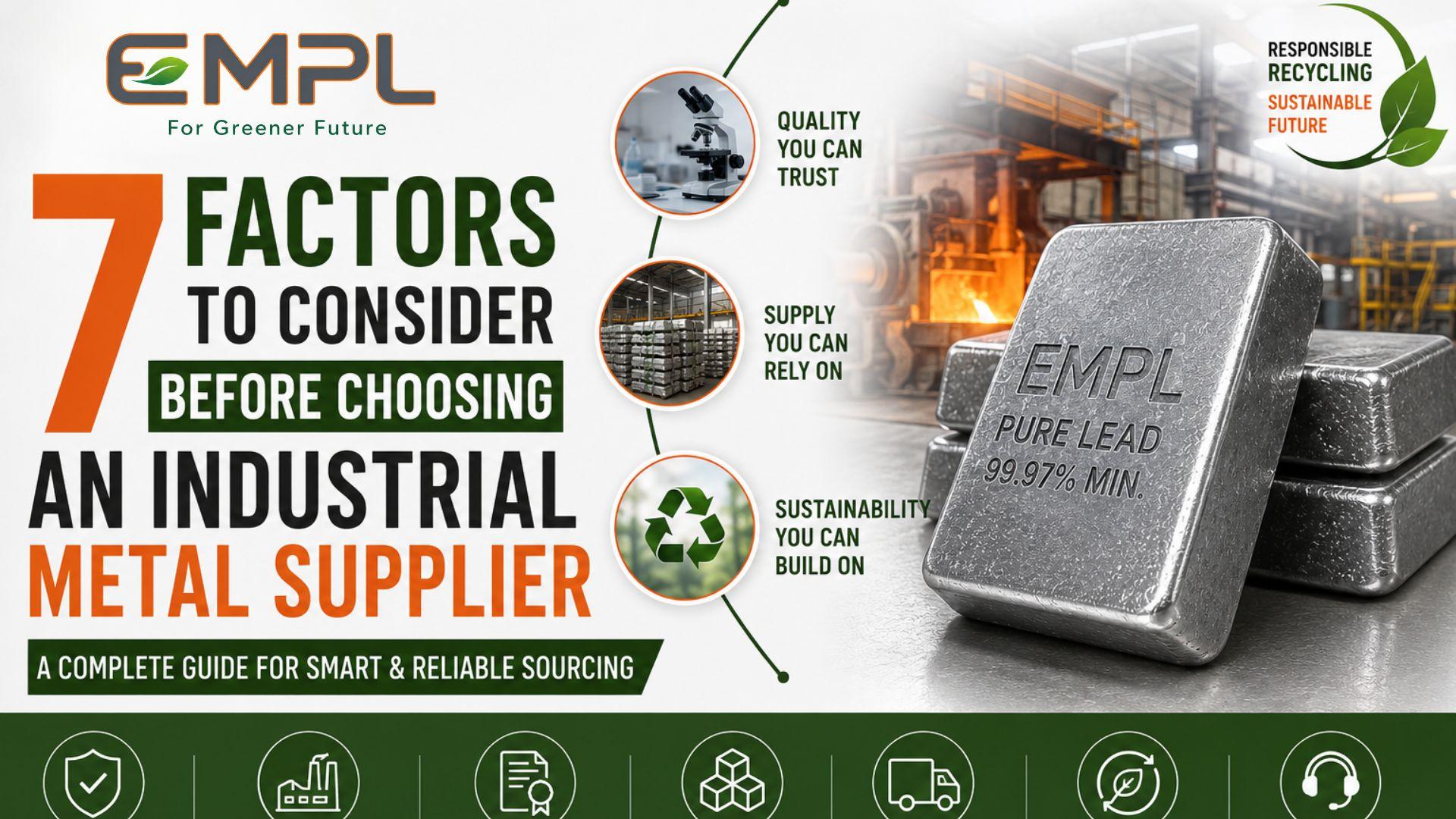
In today's competitive manufacturing environment, selecting the right raw material supplier is as important as choosing the right machinery or technology. Whether you operate in battery manufacturing, automotive, infrastructure, chemical processing, cable manufacturing, or healthcare, the quality of your metals directly impacts your product performance, operational efficiency, and customer satisfaction.
Among industrial metals, lead remains one of the most widely used materials due to its excellent corrosion resistance, density, recyclability, and versatility. However, not all lead manufacturers or lead suppliers maintain the same standards of quality, consistency, and reliability.
Choosing the wrong supplier can lead to production delays, inconsistent material quality, increased costs, and compliance issues.
In this guide, we'll discuss the seven essential factors every business should consider before selecting an industrial metal supplier.
1. Product Quality & Purity Standards
The first and most important factor is product quality.
Industrial applications demand consistent chemical composition and high-purity metals. Even slight variations in metal composition can affect product performance, durability, and safety.
When evaluating lead manufacturers, ask about:
- Purity levels
- Chemical composition
- Manufacturing standards
- Batch consistency
- Testing procedures
A reliable supplier should provide quality reports and maintain strict quality control throughout the manufacturing process.
Why it matters:
Consistent purity leads to consistent product performance.
Also Read: Lead Recycling Process: From Scrap Collection to High-Purity Lead
2. Manufacturing Infrastructure & Technology
Modern manufacturing facilities produce better-quality products while maintaining higher operational efficiency.
Choose lead suppliers that invest in:
- Advanced smelting technology
- Modern refining equipment
- Automated production systems
- Pollution control systems
- Energy-efficient manufacturing
Well-equipped facilities are better positioned to maintain product quality and meet growing customer demand.
Technology also improves process consistency and reduces production errors.
3. Industry Certifications & Compliance
Industrial buyers should always verify whether a supplier complies with national and international quality standards.
Look for manufacturers with certifications such as:
- ISO Quality Management Systems
- Environmental Compliance Certifications
- Pollution Control Approvals
- Safety Standards
Regulatory compliance demonstrates a company's commitment to quality, sustainability, and responsible manufacturing.
It also minimizes supply chain risks for your business.
4. Product Range & Customization Capabilities
Different industries require different grades of lead and lead alloys.
A capable supplier should offer:
- Pure Lead
- Lead Alloys
- Antimonial Lead
- Tin Lead Alloys
- Customized Alloy Compositions
- Industrial Lead Products
Working with a supplier capable of customization reduces procurement complexity and improves operational efficiency.
Instead of sourcing from multiple vendors, businesses can rely on one trusted partner.
5. Supply Chain Reliability
Even the highest-quality products become ineffective if deliveries are delayed.
Reliable lead suppliers should have:
- Strong inventory management
- Efficient logistics
- Consistent production capacity
- Timely dispatch systems
- Nationwide delivery capabilities
Supply interruptions can halt manufacturing operations, increase costs, and delay customer deliveries.
Choose a supplier with proven supply chain reliability.
6. Sustainability & Responsible Recycling
Sustainability has become a key consideration for industrial procurement teams.
Today, businesses prefer lead manufacturers that follow environmentally responsible recycling practices.
Look for companies that:
- Recycle lead responsibly
- Minimize industrial waste
- Follow emission control standards
- Promote circular economy principles
- Use resource-efficient manufacturing processes
Choosing a sustainable supplier not only supports environmental goals but also strengthens your organization's ESG initiatives and corporate reputation.
7. Technical Support & Industry Experience
The best suppliers don't simply deliver products—they become long-term business partners.
Experienced lead manufacturers understand the specific requirements of different industries and can recommend the right products for each application.
Consider suppliers with:
- Technical expertise
- Experienced quality teams
- Industry knowledge
- Responsive customer support
- Long-term market presence
Technical guidance can help optimize product selection, improve manufacturing efficiency, and reduce production challenges.
Why Choosing the Right Lead Supplier Matters
Selecting the right supplier creates long-term value beyond pricing.
A trusted supplier helps businesses achieve:
✔ Consistent Product Quality
✔ Reliable Delivery
✔ Better Manufacturing Performance
✔ Reduced Production Downtime
✔ Regulatory Compliance
✔ Long-Term Cost Savings
✔ Sustainable Procurement
The right partnership contributes directly to operational success.
Questions You Should Ask Before Finalizing a Supplier
Before making a purchasing decision, consider asking:
- What purity levels do your products offer?
- What quality testing processes do you follow?
- Can you provide customized lead alloy compositions?
- What certifications does your facility hold?
- How do you ensure consistent supply?
- What sustainability initiatives do you follow?
- Can you provide technical assistance for product selection?
These questions provide valuable insights into the supplier's capabilities and reliability.
Also Read: How to Choose the Right Metal Supplier for Your Industry Needs
Why EEYA Metal & Alloys Pvt. Ltd.?
At EEYA Metal & Alloys Pvt. Ltd. (EMPL), we believe that industrial partnerships are built on quality, trust, and consistency.
As one of the trusted lead manufacturers and lead suppliers in India, we combine advanced manufacturing practices with rigorous quality control to deliver products that meet the diverse requirements of industries nationwide.
Our strengths include:
- High-Purity Lead & Lead Alloys
- Advanced Recycling & Refining Processes
- Stringent Quality Testing
- Reliable Supply Chain
- Customized Product Solutions
- Sustainable Manufacturing Practices
- Customer-Centric Technical Support
Whether you require pure lead, lead alloys, or customized industrial solutions, EMPL is committed to delivering dependable products backed by quality assurance and responsible manufacturing.
Conclusion
Choosing an industrial metal supplier is a strategic decision that directly impacts your business performance.
By evaluating factors such as product quality, manufacturing capabilities, certifications, sustainability, supply reliability, and technical expertise, businesses can build stronger, more resilient supply chains.
As industries continue to evolve, working with experienced lead manufacturers and dependable lead suppliers ensures consistent quality, operational efficiency, and long-term business success.
If you're looking for a reliable partner for premium-quality lead and lead alloy products, choosing a supplier that prioritizes quality, innovation, and sustainability will always be a smart investment.
Frequently Asked Questions (FAQs)
1. How do I choose the right lead manufacturer?
Look for manufacturers with advanced production facilities, quality certifications, consistent product quality, reliable delivery, and strong technical expertise.
2. Why is product purity important in industrial lead?
Higher purity ensures better performance, longer product life, improved safety, and consistent manufacturing results.
3. What industries use lead and lead alloys?
Lead and lead alloys are widely used in battery manufacturing, telecommunications, healthcare, construction, cable manufacturing, radiation shielding, and chemical industries.
4. Why should I choose recycled lead?
Recycled lead offers the same performance as primary lead while reducing environmental impact, conserving natural resources, and supporting a circular economy.


