


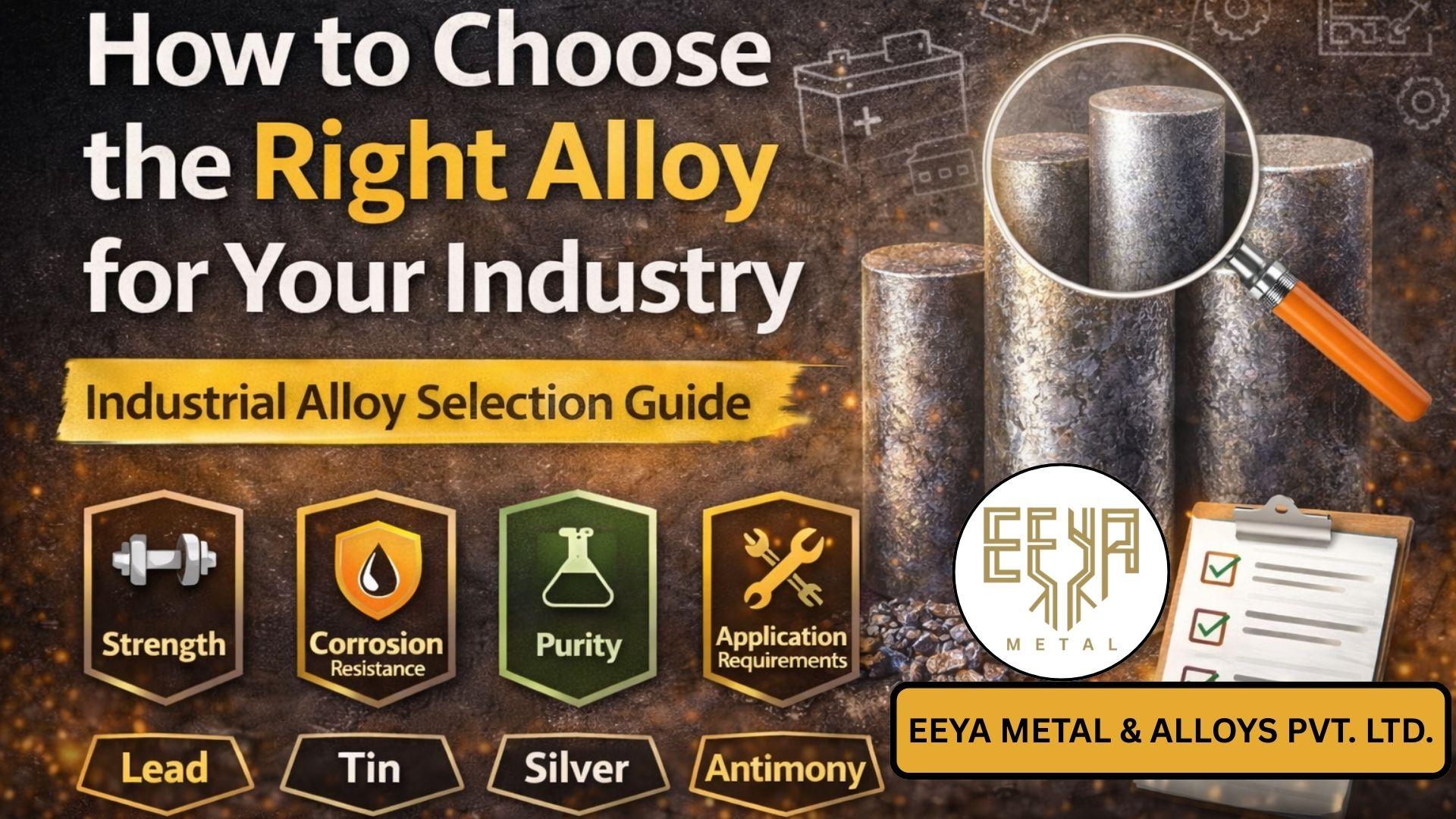
Choosing the right alloy is one of the most important decisions in industrial manufacturing. The performance, durability, safety, and cost-efficiency of your final product depend heavily on the quality and composition of the alloy used.
Whether you are in battery manufacturing, electronics, automotive, construction, or chemical processing, selecting the correct alloy can help reduce operational failures and improve long-term output.
In this guide, we explain how industries can choose the right alloy based on application needs and why working with a trusted supplier like EEYA Metal & Alloys Pvt. Ltd. ensures consistent results.
What Is an Alloy?
An alloy is a mixture of a base metal combined with other elements to enhance specific properties such as:
-
Strength
-
Hardness
-
Corrosion resistance
-
Conductivity
-
Thermal performance
Industries use alloys because pure metals alone may not meet modern manufacturing requirements.
Why Choosing the Right Alloy Matters
Selecting the wrong alloy can lead to:
❌ Higher rejection rates
❌ Premature component failure
❌ Poor corrosion resistance
❌ Reduced product life
❌ Increased maintenance and downtime
On the other hand, the right alloy ensures:
✅ Consistent mechanical performance
✅ Better durability
✅ Improved manufacturing efficiency
✅ Long-term cost savings
Also Read: How to Choose the Right Metal Supplier for Your Industry Needs
Key Factors to Consider When Choosing an Alloy
1. Understand Your End Application
The first step is defining where and how the alloy will be used.
Ask questions like:
-
Will it face high temperatures?
-
Is corrosion resistance required?
-
Does it need high electrical conductivity?
-
Is it for structural strength or casting?
Different industries require different alloy grades.
2. Required Purity Level
Purity plays a major role in alloy performance.
High-purity alloys reduce impurities that can cause:
-
Cracks
-
Weak joints
-
Conductivity loss
-
Structural inconsistency
At EEYA Metal & Alloys Pvt. Ltd., alloys are produced with strict purity control and scientific refining processes to meet industrial standards.
3. Mechanical Properties Needed
Your alloy choice should match required properties such as:
-
Tensile strength
-
Hardness
-
Wear resistance
-
Fatigue performance
For example:
-
Antimony Lead Alloys increase hardness in battery grids
-
Tin-based alloys provide smooth soldering and durability
4. Corrosion & Environmental Resistance
Industries such as marine, chemical, and infrastructure need alloys that resist:
-
Moisture
-
Chemicals
-
Oxidation
-
Long-term exposure
Choosing corrosion-resistant alloys improves safety and reduces replacement costs.
5. Electrical & Thermal Conductivity
For electronics and electrical industries, alloy conductivity is critical.
-
Pure tin and tin alloys are widely used in PCB manufacturing
-
High-conductivity alloys reduce energy loss and improve efficiency
6. Compliance & Industry Standards
Always ensure the alloy meets:
-
ISO standards
-
Customer specifications
-
Environmental and safety compliance
Ask suppliers for:
✔ COA (Certificate of Analysis)
✔ Composition reports
✔ Testing documentation
EEYA Metal provides certified quality documentation for industrial buyers.
7. Supplier Capability & Customization
Not every supplier can deliver consistent alloy batches.
A trusted industrial alloy supplier should provide:
-
Customized alloy composition
-
Batch-to-batch consistency
-
Technical guidance
-
Reliable supply chain support
EEYA Metal & Alloys Pvt. Ltd. specializes in customized alloy solutions including:
-
Lead and Lead Alloys
-
Tin and Tin Alloys
-
Antimony Alloys
-
Silver Alloys
Common Alloys and Their Industrial Uses
Lead Alloys
Used in:
-
Lead-acid battery grids
-
Radiation shielding
-
Industrial casting
Tin Alloys
Used in:
-
Soldering applications
-
Electronics manufacturing
-
Specialty coatings
Antimony Alloys
Used in:
-
Battery industry
-
Hardening lead products
-
Flame retardant applications
Also Read: Top Industrial Uses of Lead, Tin, and Antimony – Complete Guide
Why Choose EEYA Metal & Alloys Pvt. Ltd.?
EEYA Metal is a trusted non-ferrous metal and alloy supplier in India, known for:
✔ High-purity refined metals
✔ Customized alloy manufacturing
✔ Scientific recycling and refining
✔ Strict quality control systems
✔ Reliable supply across industries
We don’t just supply alloys — we help industries choose the right grade and composition for better performance and efficiency.
Conclusion
Choosing the right alloy is essential for industrial success. By focusing on purity, application needs, compliance, and supplier expertise, industries can improve product strength, reduce waste, and enhance operational efficiency.
For high-quality industrial alloys, manufacturers across India trust EEYA Metal & Alloys Pvt. Ltd. for consistent supply and customized solutions.
🌐 Visit: www.eeyametal.com
📞 Contact EEYA for alloy guidance and sourcing support.
FAQ Section
Q1: What factors should be considered when choosing an alloy?
Key factors include mechanical strength, corrosion resistance, conductivity, purity level, application environment, and industry standards.
Q2: Which alloys are commonly used in manufacturing?
Common industrial alloys include lead alloys, tin alloys, antimony alloys, and silver alloys.
Q3: Why is alloy purity important in manufacturing?
High purity alloys reduce structural defects, improve conductivity, and ensure consistent industrial performance.


