


The global manufacturing industry is increasingly focused on resource efficiency, responsible production and sustainable supply chains. In this changing industrial landscape, lead recycling has an important role to play.
Lead is a highly recyclable metal that can be recovered, refined and converted into usable material again. When recycling is carried out through controlled processes, it can help reduce dependence on virgin resources while supporting the continuous availability of lead for industrial applications.
For manufacturers and industrial buyers, this creates an opportunity to look beyond traditional material procurement and build a more circular and responsible supply chain.
But responsible lead recycling is not simply about collecting scrap and recovering metal. It involves a complete chain of activities—from responsible collection and processing to refining, quality control and supplying material that meets industrial requirements.
This article explores how lead recycling and responsible manufacturing contribute to a circular supply chain and why they are becoming increasingly relevant for modern industries.
What Is Lead Recycling?
Lead recycling is the process of recovering lead from used products, manufacturing scrap and other lead-bearing materials and processing it into reusable lead or lead alloys.
Instead of allowing valuable material to become waste, recycling creates a pathway through which lead can return to industrial use.
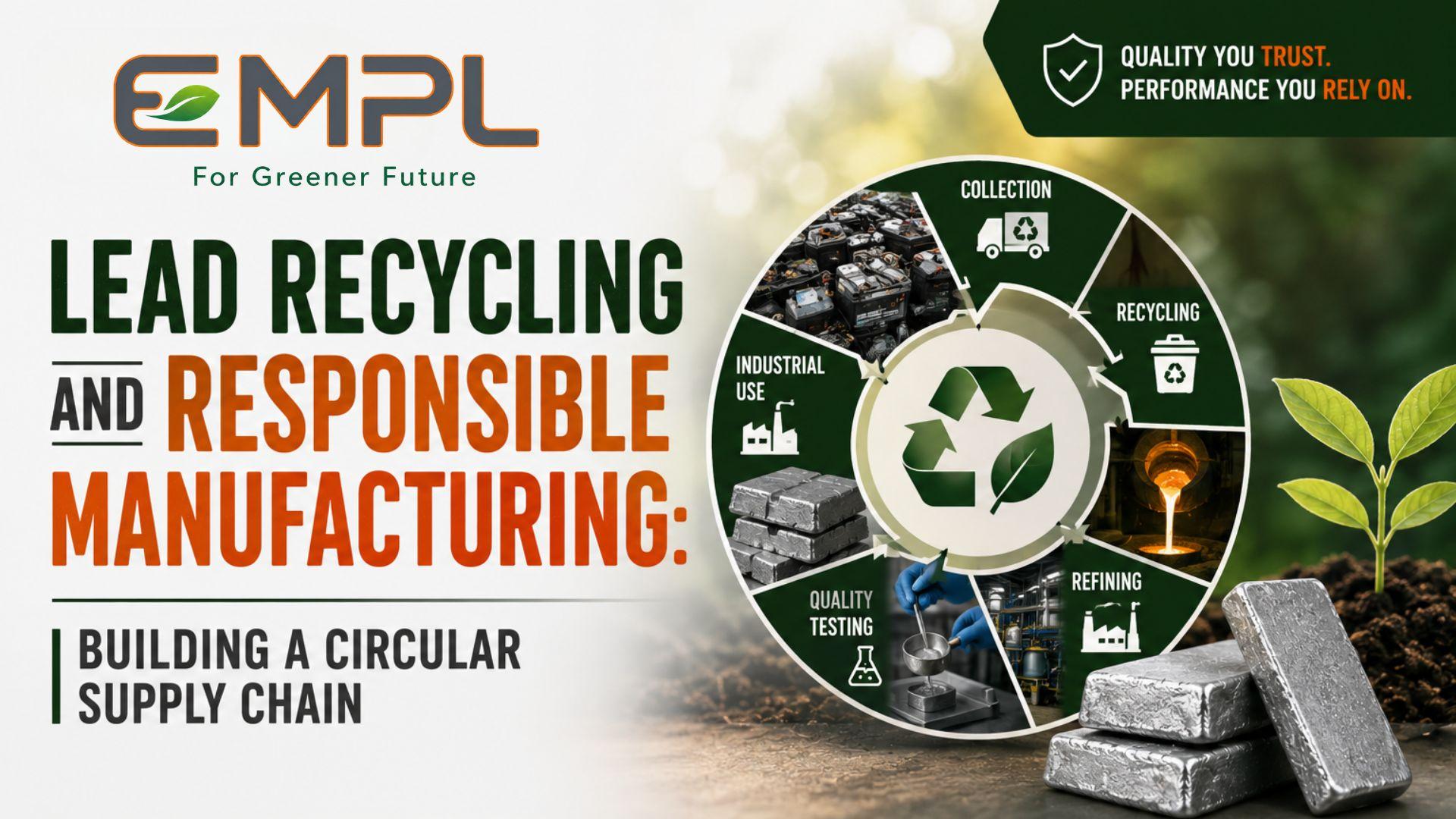
A simplified recycling cycle can be represented as:
Used Material → Collection → Processing → Lead Recovery → Refining → Quality Testing → Industrial Application
This cycle allows lead to move through multiple useful applications rather than being treated as a one-time resource.
The concept is particularly relevant to industries that consume significant quantities of lead and lead alloys.
Also Read: Lead Recycling Process: From Scrap Collection to High-Purity Lead | Best Lead Supplier in India
Why Lead Is Well Suited to a Circular Economy
One of the major advantages of lead is its recyclability.
Unlike materials that may lose significant value after their first use, lead can be recovered and refined for further applications when appropriate recycling and processing systems are used.
This supports the fundamental idea behind a circular economy:
Keep valuable materials in use for as long as possible.
In a traditional linear model, the flow of materials is often:
Extract → Manufacture → Use → Dispose
A circular model aims to create a different flow:
Recover → Recycle → Refine → Manufacture → Use → Recover Again
Lead recycling fits naturally into this model.
The Role of Responsible Manufacturing
Recycling alone does not automatically create a sustainable supply chain.
The way materials are collected, processed, refined, tested and supplied also matters.
Responsible manufacturing means maintaining control over the material and production process while focusing on quality, efficiency, safety and environmental responsibility.
For lead recycling, this can involve:
- Responsible sourcing of recyclable material
- Controlled material handling
- Appropriate processing and refining
- Quality testing
- Consistent material composition
- Responsible waste management
- Efficient use of resources
- Reliable industrial supply
The objective is to recover value from existing materials while producing a material that can meet the requirements of modern manufacturing.
From Scrap to Industrial-Grade Lead
One of the most important aspects of the recycling process is transforming recovered material into a consistent industrial product.
A typical journey can include several stages.
1. Collection
Lead-bearing scrap and used materials are collected through appropriate channels.
Proper segregation and handling at this stage can support better downstream processing.
2. Processing
The collected material is processed to separate lead-bearing components and prepare them for recovery.
3. Smelting and Recovery
Controlled processing allows lead to be recovered from the material.
4. Refining
The recovered lead can then undergo refining to achieve the required level of purity and composition.
5. Testing
Material quality and chemical composition can be evaluated against the required specifications.
6. Manufacturing
The resulting lead or lead alloy can be supplied for appropriate industrial applications.
This creates a continuous material cycle:
Scrap → Recovered Lead → Refined Lead → Manufacturing → New Product
Why Quality Still Matters in Recycled Lead
A common misconception is that recycled material automatically means lower-quality material.
In reality, the quality of recycled lead depends heavily on the processing, refining and quality-control systems used.
For industrial buyers, the important question is not simply:
“Is this recycled lead?”
It is:
“Does the recycled material meet the required specification for my application?”
Important considerations can include:
- Lead purity
- Chemical composition
- Impurity levels
- Alloying elements
- Batch consistency
- Testing and documentation
A responsible recycled lead supplier should therefore focus not only on recovery but also on producing consistent material suitable for its intended industrial application.
The Importance of Material Consistency
Manufacturing processes are designed around expected material characteristics.
If the composition of incoming material varies significantly between batches, manufacturers may experience challenges in:
- Production control
- Processing behaviour
- Product consistency
- Quality assurance
- Manufacturing efficiency
This is why batch-to-batch consistency is an important consideration when sourcing recycled lead and lead alloys.
A strong circular supply chain should not compromise on material quality.
Instead, recycling should combine:
Resource Recovery + Quality Control + Consistent Manufacturing
Lead Recycling and Resource Efficiency
Recycling can contribute to more efficient use of existing resources by recovering valuable metal from materials that have already entered the industrial ecosystem.
Instead of continuously depending on new raw material inputs, recycling allows manufacturers to make greater use of material already available within the economy.
This can support:
- Better resource utilization
- Reduced material wastage
- Recovery of valuable metals
- More efficient industrial processes
- Greater supply-chain resilience
For industries that require lead on a regular basis, developing reliable recycled-material supply chains can therefore become an important part of long-term procurement planning.
Also Read: Why Recycled Metals Are the Future of Manufacturing
Building a Circular Lead Supply Chain
A circular supply chain requires coordination between multiple participants.
It is not created by the recycler alone.
The ecosystem can include:
Collection Partners → Recycling & Processing Facilities → Refiners → Lead Manufacturers → Industrial Buyers → End Users
After products reach the end of their useful life, appropriate material can return to the collection and recycling system.
This creates a continuous loop.
The Circular Flow
Industrial Use
↓
End-of-Life Material
↓
Responsible Collection
↓
Recycling & Recovery
↓
Refining & Quality Control
↓
Industrial-Grade Lead / Lead Alloy
↓
Manufacturing
↓
Industrial Use Again
The stronger this loop becomes, the more efficiently valuable material can remain within the supply chain.
Why Responsible Sourcing Matters for Industrial Buyers
For modern manufacturers, sustainability is increasingly becoming part of procurement decisions.
Industrial buyers are not only evaluating:
- Price
- Quality
- Delivery
They may also consider:
- Where the material comes from
- How it is processed
- Whether the supplier follows responsible practices
- How efficiently resources are utilized
- Whether the supplier can support long-term requirements
This means responsible lead recycling can become a valuable part of a company's overall sourcing strategy.
A supplier that combines recycling with controlled manufacturing can offer buyers both material supply and a more circular approach to resource utilization.
Recycling Can Support Supply-Chain Resilience
Supply chains can be affected by fluctuations in raw material availability, commodity markets, transportation and global economic conditions.
A strong recycling ecosystem can provide an additional source of material by recovering lead already present in the economy.
This does not eliminate the need for primary resources, but it can contribute to a more diversified and resilient supply system.
For manufacturers, this can be particularly valuable when they require a consistent supply of lead or lead alloys over the long term.
Responsible Manufacturing Goes Beyond Recycling
While recycling is an important component, responsible manufacturing involves a much broader approach.
A responsible manufacturer should consider the complete production cycle.
Efficient Resource Use
Using raw materials efficiently helps reduce unnecessary material loss.
Process Control
Controlled manufacturing processes support consistent product quality.
Quality Assurance
Testing and inspection help ensure that materials meet the required specifications.
Waste Management
Manufacturing waste should be handled responsibly and, where possible, recovered or recycled.
Product Consistency
Consistent material quality helps industrial customers maintain stable production.
Long-Term Sustainability
The goal should be to build systems that remain commercially and environmentally responsible over time.
The Role of Lead and Lead Alloy Manufacturers
Manufacturers sit at the center of the circular supply chain.
They transform recovered material into products that can be used again in industrial applications.
A capable lead manufacturer needs to balance several priorities:
Quality + Capacity + Consistency + Responsible Manufacturing
For lead alloys, this becomes even more important because controlled alloy composition can influence material properties and application performance.
Manufacturers therefore need appropriate systems for:
- Material segregation
- Processing
- Refining
- Alloying
- Chemical analysis
- Quality control
- Packaging
- Dispatch
These capabilities help turn recycling into a dependable industrial supply solution.
What Industrial Buyers Should Look for in a Lead Supplier
If your company is sourcing recycled lead or lead alloys, consider evaluating suppliers across several areas.
1. Quality
Does the supplier provide material according to defined specifications?
2. Purity
Can the required purity levels be consistently achieved?
3. Composition
Is the chemical composition controlled and documented?
4. Consistency
Can the supplier maintain similar quality across repeated batches?
5. Manufacturing Capability
Does the supplier have adequate processing, refining and alloying capabilities?
6. Supply Capacity
Can they support your current and future requirements?
7. Responsible Recycling
Do they have a clear focus on responsible material recovery and recycling?
8. Transparency
Are material specifications and quality requirements communicated clearly?
These factors can help manufacturers identify a reliable lead supplier rather than simply choosing based on price.
Lead Recycling and the Future of Circular Manufacturing
As industries move toward more resource-efficient manufacturing models, recycling is expected to remain an important part of industrial material supply.
For lead, the opportunity is particularly significant because the metal can move through multiple recovery and reuse cycles.
The future of lead recycling will increasingly depend on:
- Better collection systems
- Efficient recovery processes
- Improved refining
- Strong quality control
- Responsible manufacturing
- Reliable recycling infrastructure
- Collaboration across the supply chain
The objective is not simply to recycle more.
It is to recycle responsibly and produce material that can reliably return to industrial use.
EMPL: Supporting a More Circular Industrial Supply Chain
At EEYA Metal & Alloys Pvt. Ltd. (EMPL), recycling and manufacturing are connected by a simple objective:
Recover value responsibly. Deliver quality consistently. Support a greener future.
Through a quality-focused approach to lead and lead alloy manufacturing, EMPL aims to support industries looking for dependable material solutions while contributing to a more circular approach to resource utilization.
From recovered material to refined lead and lead alloys, the focus remains on quality, consistency and responsible manufacturing.
Because a circular supply chain is not just about what happens to material after use.
It begins with how responsibly that material is recovered, processed and returned to industry.
Conclusion
Lead recycling and responsible manufacturing can play an important role in building a more circular industrial economy.
By recovering lead from used materials, refining it through controlled processes and returning it to manufacturing, industries can create a continuous cycle of material use.
The strongest circular supply chains combine:
Responsible Recovery → Efficient Processing → Quality Refining → Consistent Manufacturing → Industrial Reuse
For industrial buyers, the opportunity is to work with suppliers that understand both sides of the equation: sustainability and performance.
Because the future of manufacturing is not simply about producing more.
It is about making better use of the resources we already have.


