


Lead is one of the world's most recycled metals, with over 80% of global lead production coming from recycled sources. Unlike many other metals, lead can be recycled repeatedly without losing its chemical or physical properties, making it one of the most sustainable materials used in modern industries.
From automotive batteries and power backup systems to radiation shielding, cable sheathing, chemicals, and industrial alloys, lead remains an essential raw material. However, the quality of the final product depends entirely on how efficiently the recycling process is carried out.
If you're looking for the best lead supplier in India, understanding how recycled lead is produced can help you choose a supplier that delivers consistent quality, reliable purity, and environmentally responsible manufacturing.
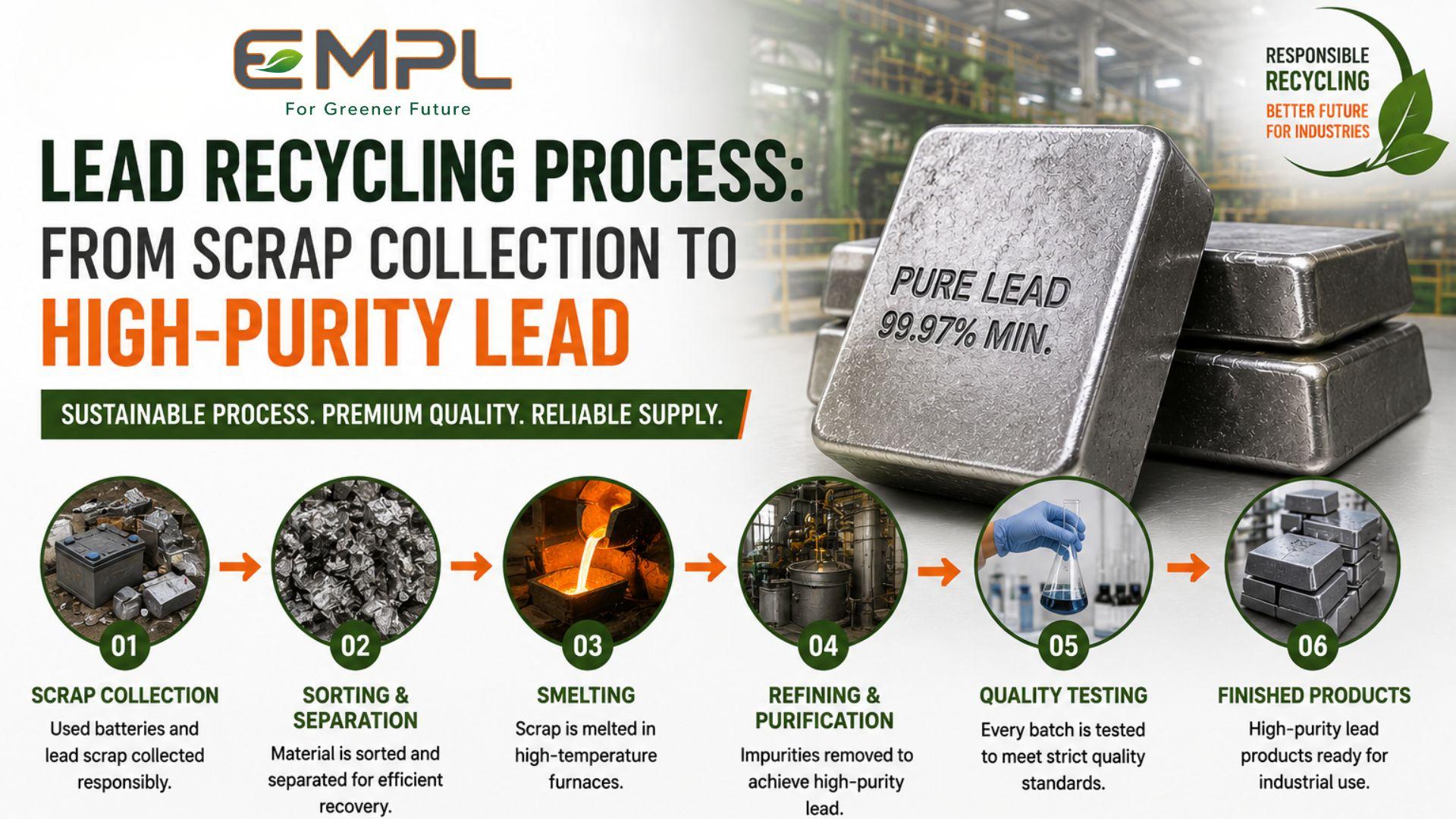
In this article, we'll take you through the complete lead recycling journey—from scrap collection to high-purity refined lead.
Why Lead Recycling Matters
Lead is a valuable metal that can be recycled indefinitely without degrading its quality. Recycling helps industries by:
- Conserving natural resources
- Reducing mining activities
- Lowering energy consumption
- Reducing carbon emissions
- Supporting a circular economy
- Ensuring continuous raw material availability
For industries, recycled lead offers the same performance as primary lead when processed using advanced refining technologies.
Also Read: Why Recycled Metals Are the Future of Manufacturing
Step 1: Collection of Lead Scrap
The recycling process begins with collecting lead-bearing materials from various industries.
Common sources include:
- Used Lead Acid Batteries (ULABs)
- Industrial Lead Scrap
- Cable Sheathing
- Lead Pipes
- Manufacturing Scrap
- Lead Sheets
- Battery Production Waste
Professional lead suppliers establish organized collection networks that ensure safe transportation and regulatory compliance.
Proper segregation at this stage is essential because contamination directly affects the purity of the final metal.
Step 2: Sorting & Inspection
Once the scrap reaches the recycling facility, every batch undergoes detailed inspection.
Materials are categorized based on:
- Lead content
- Type of alloy
- Contamination level
- Moisture
- Plastic content
- Electrolyte residue
Modern facilities use mechanical sorting systems and manual quality inspection to maximize recovery efficiency.
This stage ensures only suitable materials enter the refining process.
Step 3: Crushing & Separation
For battery recycling, batteries are first broken down using automated crushing systems.
Different materials are separated into:
- Lead Components
- Plastic
- Electrolyte
- Separators
The plastic is sent for recycling, while the electrolyte is neutralized using environmentally safe methods.
The recovered lead components move to the smelting process.
Step 4: Smelting Process
The separated lead materials are charged into high-temperature furnaces.
During smelting:
- Metallic lead melts
- Impurities rise as slag
- Oxides are reduced
- Valuable metals are recovered
Advanced furnace technologies improve:
- Recovery efficiency
- Metal purity
- Energy efficiency
- Emission control
This stage converts lead scrap into crude lead bullion.
Step 5: Refining & Purification
This is the most critical stage of the recycling process.
The crude lead still contains impurities such as:
- Antimony
- Tin
- Copper
- Arsenic
- Bismuth
- Other trace metals
Special refining techniques remove unwanted elements until the desired purity is achieved.
Depending on customer requirements, manufacturers produce:
- Pure Lead
- Lead Alloys
- Antimonial Lead
- Tin Lead Alloys
- Customized Industrial Grades
A reliable lead supplier performs strict chemical analysis during this process to ensure every batch meets industrial standards.
Step 6: Quality Testing
Before dispatch, every batch undergoes laboratory testing.
Testing includes:
Chemical Composition Analysis
Ensures required purity levels.
Spectrometer Testing
Verifies alloy composition.
Physical Inspection
Checks surface finish and casting quality.
Weight Verification
Ensures dimensional accuracy.
Batch Traceability
Every batch is documented for complete quality assurance.
The best lead supplier in India maintains rigorous testing protocols to ensure consistent product quality across every shipment.
Step 7: Casting into Finished Products
Once refined, molten lead is cast into different industrial forms such as:
- Lead Ingots
- Lead Blocks
- Lead Sheets
- Lead Bricks
- Lead Billets
- Lead Alloy Ingots
Each product is manufactured according to customer specifications.
Step 8: Industrial Applications
The finished lead products are supplied to multiple industries, including:
Battery Manufacturing
The largest consumer of refined lead.
Cable Industry
Used for protective sheathing.
Radiation Shielding
Hospitals, laboratories, and nuclear facilities use lead sheets and bricks for radiation protection.
Chemical Industry
Used in corrosion-resistant equipment.
Construction
Lead is used in roofing, waterproofing, and vibration control.
Defence & Infrastructure
Specialized lead alloys are used for critical industrial applications.
Environmental Benefits of Lead Recycling
Recycling lead significantly reduces environmental impact.
Key benefits include:
✔ Lower greenhouse gas emissions
✔ Reduced landfill waste
✔ Conservation of natural resources
✔ Lower energy consumption
✔ Reduced dependence on mining
✔ Support for sustainable manufacturing
Choosing recycled lead contributes to both industrial efficiency and environmental responsibility.
What Makes the Best Lead Supplier in India?
Not all suppliers maintain the same manufacturing standards.
When selecting a lead supplier, industries should consider:
High Purity Products
Consistent chemical composition ensures better product performance.
Modern Recycling Infrastructure
Advanced recycling plants improve recovery and quality.
Quality Certifications
Look for ISO-certified manufacturing facilities with strict quality control processes.
Reliable Supply Chain
Consistent availability minimizes production delays.
Technical Expertise
An experienced supplier can recommend suitable lead grades for specific industrial applications.
Sustainable Manufacturing Practices
Environmentally responsible recycling reflects a long-term commitment to quality and compliance.
Why Industries Prefer Recycled Lead
Industries increasingly prefer recycled lead because it offers:
- Excellent performance
- High availability
- Lower environmental impact
- Cost efficiency
- Consistent quality
- Circular economy benefits
With proper refining technology, recycled lead performs identically to primary lead in most industrial applications.
Why Choose EEYA Metal & Alloys Pvt. Ltd.?
At EEYA Metal & Alloys Pvt. Ltd. (EMPL), we follow advanced recycling and refining processes to manufacture premium-quality lead and lead alloy products for diverse industries.
Our commitment to quality, sustainability, and customer satisfaction has made us a trusted lead supplier for businesses across India.
We focus on:
- High-Purity Lead Manufacturing
- Consistent Quality Standards
- Reliable Industrial Supply
- Sustainable Recycling Practices
- Customized Lead Alloy Solutions
- Timely Delivery Across India
Whether you require pure lead, lead alloys, or customized industrial grades, EMPL delivers dependable solutions backed by strict quality assurance and technical expertise.
Conclusion
The lead recycling process is far more than simply melting scrap. It is a carefully controlled industrial operation involving collection, segregation, smelting, refining, quality testing, and precision manufacturing.
By partnering with the best lead supplier in India, businesses can ensure consistent product quality, uninterrupted supply, and environmentally responsible sourcing.
As industries continue to prioritize sustainability and efficiency, recycled lead will remain one of the most valuable materials powering manufacturing, infrastructure, energy storage, and industrial growth.
If you're looking for a reliable lead supplier offering high-quality recycled lead and lead alloys, choose a partner committed to quality, innovation, and sustainability.
Also Read: Importance of Consistent Metal Supply in Industrial Manufacturing


