

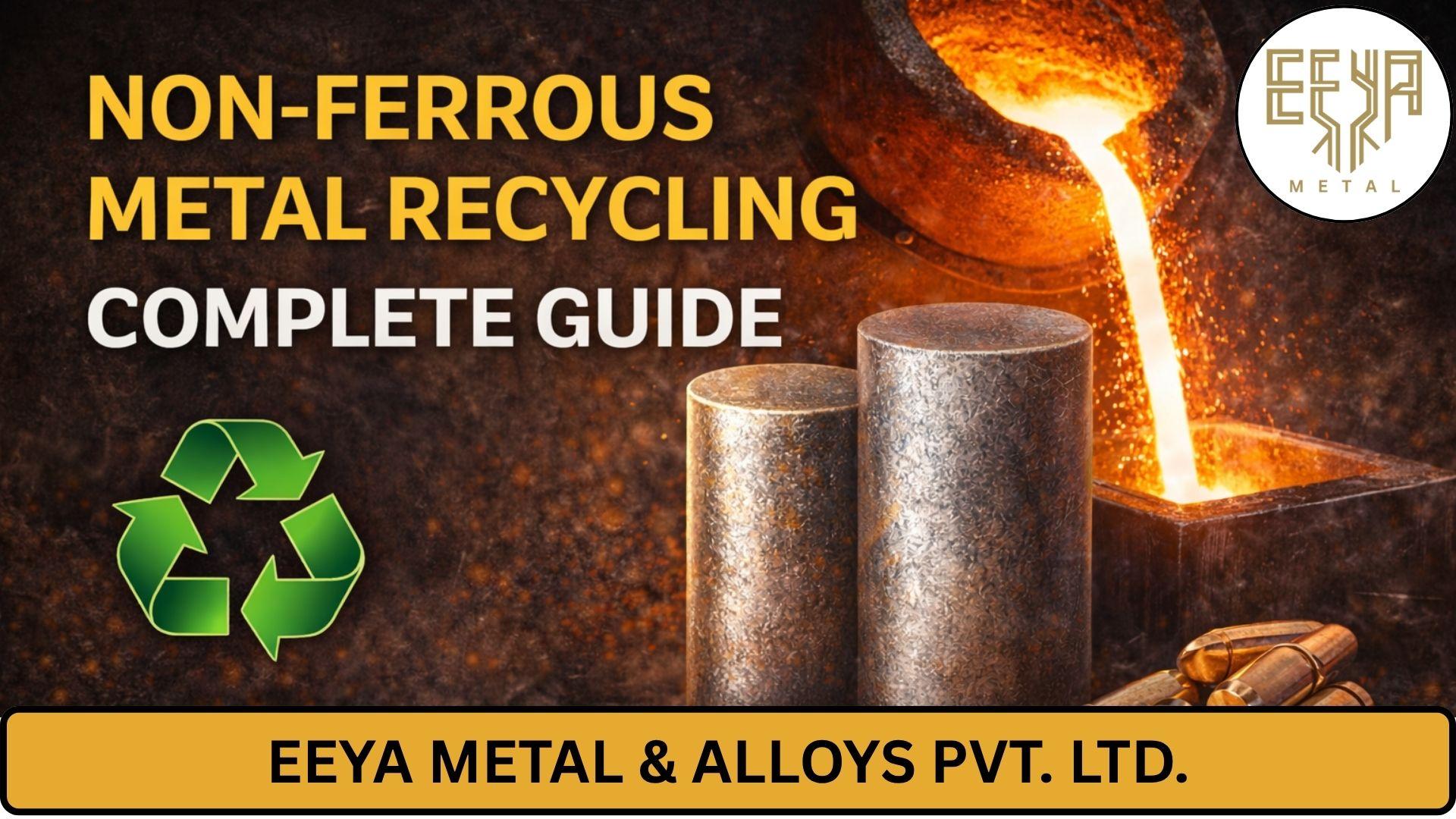
In today’s industrial landscape, sustainability and resource efficiency are no longer optional—they are essential. One of the most impactful ways industries are achieving this is through non-ferrous metal recycling.
Non-ferrous metals such as Lead, Tin, Antimony, Copper, and Silver play a crucial role across industries like batteries, electronics, automotive, and infrastructure. Recycling these metals not only conserves natural resources but also reduces energy consumption, environmental impact, and production costs.
In this complete guide, we explore what non-ferrous metal recycling is, how it works, its benefits, and why it is critical for modern manufacturing.
Also Read: Top Applications of Lead in Modern Industries
What Are Non-Ferrous Metals?
Non-ferrous metals are metals that do not contain iron as their primary component. Unlike ferrous metals, they do not rust and offer superior properties such as:
-
High corrosion resistance
-
Excellent electrical conductivity
-
Lightweight structure
-
High recyclability
Common Non-Ferrous Metals Include:
-
Lead
-
Tin
-
Antimony
-
Copper
-
Silver
-
Aluminum
These metals are widely used in industries where performance, durability, and efficiency are essential.
What is Non-Ferrous Metal Recycling?
Non-ferrous metal recycling is the process of collecting, processing, and reusing metals without losing their original properties.
Unlike many materials, non-ferrous metals can be recycled multiple times without degradation in quality, making them highly valuable for a circular economy.
Simple Definition:
Non-ferrous metal recycling is the process of converting scrap metal into reusable high-purity metal for industrial applications.
How Non-Ferrous Metal Recycling Works
The recycling process involves multiple stages to ensure purity, consistency, and industrial usability.
1. Collection & Segregation
-
Scrap metals are collected from industries, batteries, electronics, and manufacturing waste
-
Materials are sorted based on type (Lead, Tin, Copper, etc.)
2. Cleaning & Pre-Treatment
-
Removal of impurities such as plastic, rubber, oil, and dirt
-
Ensures higher efficiency during melting
3. Melting & Refining
-
Metals are melted in furnaces
-
Impurities are removed through chemical and thermal processes
4. Purification
-
Advanced refining techniques ensure high purity levels (up to 99.98%)
5. Casting & Solidification
-
Molten metal is cast into:
-
Ingots
-
Billets
-
Custom alloy forms
6. Quality Testing
-
Lab testing ensures:
-
Chemical composition
-
Purity levels
-
Industrial standards compliance
Key Benefits of Non-Ferrous Metal Recycling
1. Energy Efficiency
Recycling metals requires significantly less energy compared to mining and refining raw materials.
👉 Example: Recycling aluminum saves up to 95% energy.
2. Cost Reduction
-
Lower raw material costs
-
Reduced production expenses
-
Better profit margins for manufacturers
3. Environmental Sustainability
-
Reduces mining activities
-
Lowers greenhouse gas emissions
-
Minimizes industrial waste
4. Unlimited Recyclability
Non-ferrous metals can be recycled again and again without losing quality, making them ideal for long-term use.
5. Resource Conservation
-
Preserves natural metal reserves
-
Supports circular economy practices
Also Read: How to Choose the Right Metal Supplier for Your Industry Needs
Applications of Recycled Non-Ferrous Metals
Recycled metals are widely used across industries:
🔹 Battery Industry
-
Lead recycling is essential for lead-acid batteries
🔹 Electronics
-
Tin and silver are used in soldering and circuit boards
🔹 Automotive
-
Lightweight metals improve fuel efficiency
🔹 Construction & Infrastructure
-
Durable and corrosion-resistant materials
🔹 Energy & Power
-
Copper and aluminum for electrical systems
Why Non-Ferrous Metal Recycling is Important for ESG Goals
Recycling directly supports Environmental, Social, and Governance (ESG) initiatives:
-
Environmental: Reduces pollution and carbon footprint
-
Social: Promotes safe waste management
-
Governance: Encourages responsible sourcing
Companies adopting recycling practices gain:
✔ Better compliance
✔ Improved brand image
✔ Sustainable growth
Challenges in Non-Ferrous Metal Recycling
Despite its benefits, recycling involves certain challenges:
-
Collection and segregation complexity
-
Maintaining purity standards
-
Handling hazardous materials (like lead batteries)
-
Regulatory compliance
This is why working with certified and experienced recyclers is critical.
Why Choose EEYA Metal & Alloys Pvt. Ltd.?
EEYA Metal is a trusted name in non-ferrous metal recycling and manufacturing in India, offering:
✔ High-purity refined metals (up to 99.98%)
✔ Scientific recycling processes
✔ Strict quality control systems
✔ Customized alloy solutions
✔ Reliable industrial supply
EEYA ensures that recycled metals meet industrial-grade performance standards—every time.
Conclusion
Non-ferrous metal recycling is not just a process—it is a strategic advantage for modern industries.
By recycling metals like Lead, Tin, Antimony, and Copper, manufacturers can:
-
Reduce costs
-
Improve sustainability
-
Enhance product performance
-
Contribute to a circular economy
As industries continue to evolve, recycling will play a central role in building a more efficient, sustainable, and responsible manufacturing ecosystem.
📞 Get in Touch with EEYA Metal & Alloys Pvt. Ltd.
🌐 www.eeyametal.com
📍 Trusted supplier of high-purity non-ferrous metals in India


