


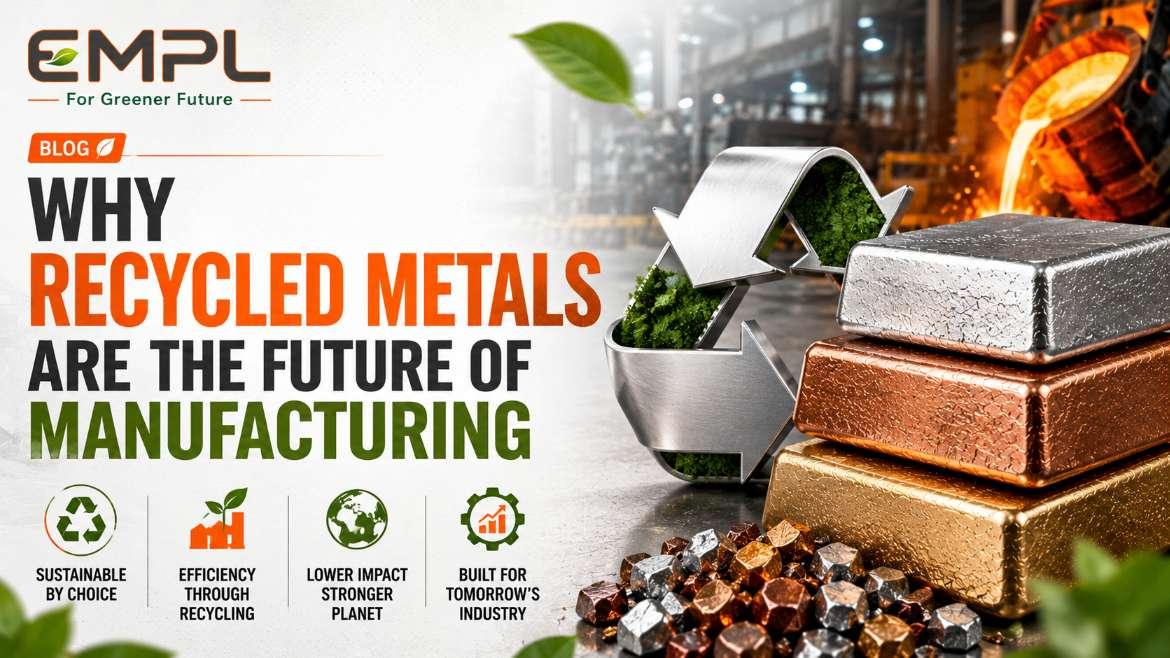
The manufacturing industry is undergoing a significant transformation. Rising raw material costs, increasing environmental regulations, and growing demand for sustainable production practices are driving industries to rethink how they source and utilize materials.
One solution is rapidly gaining momentum across sectors such as automotive, battery manufacturing, electronics, infrastructure, and engineering: recycled metals.
Today, recycled metals are no longer viewed as alternatives to virgin materials—they are becoming the foundation of modern manufacturing. With advancements in refining and quality control technologies, recycled metals can now achieve high purity levels while delivering the same performance, reliability, and durability as newly mined metals.
At EEYA Metal & Alloys Pvt. Ltd. (EMPL), we believe recycled metals are not just part of the future—they are actively shaping it.
What Are Recycled Metals?
Recycled metals are metals recovered from scrap materials, used products, industrial waste, and end-of-life components. These materials are collected, processed, refined, and transformed into reusable industrial-grade metals.
Common recycled non-ferrous metals include:
-
Lead
-
Tin
-
Copper
-
Silver
-
Aluminum
-
Antimony
Unlike many raw materials, metals can be recycled repeatedly without significant loss of quality, making them ideal for sustainable manufacturing systems.
Also Read: How Metal Purity Impacts Product Life & Performance
Why Manufacturing Is Shifting Towards Recycled Metals
Several global trends are accelerating the adoption of recycled metals.
1. Growing Demand for Sustainable Manufacturing
Governments, investors, and consumers are increasingly demanding environmentally responsible production practices.
Manufacturers are expected to:
-
Reduce carbon emissions
-
Minimize waste generation
-
Improve resource efficiency
-
Support circular economy initiatives
Using recycled metals helps organizations achieve these sustainability goals while maintaining production quality.
2. Conservation of Natural Resources
Mining operations require extensive extraction activities that consume large amounts of energy and natural resources.
By recycling metals, industries can:
-
Reduce dependence on mining
-
Preserve natural metal reserves
-
Lower environmental impact
-
Improve long-term resource availability
This makes recycling one of the most effective methods of responsible resource management.
3. Significant Energy Savings
Producing metals from recycled materials requires substantially less energy than extracting and refining metals from ore.
Examples include:
-
Aluminum recycling can save up to 95% of the energy required for primary production.
-
Copper recycling requires significantly less energy than mining and refining new copper.
-
Lead recycling reduces energy consumption while maintaining high purity standards.
These savings directly contribute to lower production costs and reduced environmental impact.
Benefits of Recycled Metals in Manufacturing
1. Cost Efficiency
Raw material costs continue to rise due to:
-
Global supply chain disruptions
-
Mining limitations
-
Transportation expenses
-
Increasing demand
Recycled metals provide manufacturers with a cost-effective alternative without compromising performance.
Benefits include:
✔ Lower procurement costs
✔ Reduced production expenses
✔ Improved profit margins
2. High Purity and Consistent Quality
Modern refining technologies have transformed metal recycling.
Advanced processes now allow manufacturers to achieve:
-
High-purity metal grades
-
Consistent chemical composition
-
Reliable industrial performance
At EEYA Metal & Alloys Pvt. Ltd., recycled metals undergo rigorous testing and refining procedures to ensure they meet strict industrial standards.
3. Reduced Carbon Footprint
Sustainability is no longer optional for modern manufacturers.
Using recycled metals helps companies:
-
Lower greenhouse gas emissions
-
Reduce energy consumption
-
Support ESG (Environmental, Social, and Governance) goals
-
Enhance sustainability reporting
This contributes to stronger environmental performance and improved corporate reputation.
4. Support for Circular Economy
The circular economy focuses on maximizing resource utilization and minimizing waste.
Metal recycling plays a crucial role by:
-
Recovering valuable materials
-
Extending product lifecycles
-
Reducing landfill waste
-
Creating sustainable supply chains
Recycled metals are among the best examples of a successful circular economy model.
Also Read: How to Choose the Right Metal Supplier for Your Industry Needs
Industries Driving the Demand for Recycled Metals
Battery Manufacturing
Lead and lead alloys recovered through recycling are widely used in:
-
Automotive batteries
-
Industrial batteries
-
Renewable energy storage systems
-
UPS and backup power solutions
Electronics Industry
Recycled metals such as tin, copper, and silver are essential for:
-
Circuit boards
-
Electrical components
-
Conductive materials
-
Soldering applications
Automotive Industry
Manufacturers use recycled metals to:
-
Improve sustainability
-
Reduce production costs
-
Support lightweight vehicle designs
Infrastructure and Construction
Recycled metals contribute to:
-
Structural components
-
Electrical systems
-
Corrosion-resistant applications
-
Long-lasting infrastructure projects
Technological Advancements Making Recycling More Efficient
The future of metal recycling is being shaped by innovation.
Modern recycling facilities now utilize:
Advanced Sorting Systems
Automated technologies improve segregation accuracy and metal recovery rates.
Precision Refining Processes
Enhanced refining methods help achieve industrial-grade purity levels.
Quality Control Technologies
Laboratory testing ensures:
-
Composition consistency
-
Product reliability
-
Regulatory compliance
These innovations are helping recycled metals compete directly with primary metals in performance and quality.
Why Recycled Metals Are Critical for ESG Goals
Environmental, Social, and Governance (ESG) initiatives have become a priority across industries.
Recycled metals help organizations:
✔ Reduce environmental impact
✔ Improve resource efficiency
✔ Demonstrate responsible sourcing practices
✔ Meet sustainability targets
✔ Strengthen stakeholder confidence
As ESG reporting becomes increasingly important, recycled metals will play an even greater role in manufacturing strategies.
EEYA Metal & Alloys Pvt. Ltd.'s Commitment to Sustainable Manufacturing
At EEYA Metal & Alloys Pvt. Ltd. (EMPL), sustainability and quality go hand in hand.
Our approach includes:
✔ Advanced recycling and refining processes
✔ High-purity non-ferrous metals
✔ Strict quality assurance systems
✔ Consistent industrial-grade supply
✔ Environmentally responsible manufacturing practices
We help industries achieve both operational excellence and sustainability objectives through reliable metal solutions.
The Future of Manufacturing Is Circular
The future manufacturing ecosystem will be built on:
-
Resource efficiency
-
Sustainable supply chains
-
Reduced environmental impact
-
Circular production models
Recycled metals support each of these objectives.
As technology advances and sustainability becomes a competitive advantage, industries that adopt recycled metals today will be better positioned for long-term success tomorrow.
Conclusion
Recycled metals are transforming the future of manufacturing by providing a sustainable, cost-effective, and high-performance alternative to newly mined materials.
Their ability to reduce environmental impact, lower production costs, conserve natural resources, and support circular economy initiatives makes them essential for modern industries.
As manufacturers continue to prioritize sustainability and efficiency, recycled metals will remain at the center of industrial innovation and responsible growth.
At EEYA Metal & Alloys Pvt. Ltd. (EMPL), we are proud to contribute to this future by delivering high-quality recycled metals that help industries build stronger, smarter, and more sustainable operations.


